The art form behind the show
Tango explained: from the Río de la Plata
Where tango came from, who made it, how it reached Paris and back, and what separates stage tango from the social dance, with UNESCO as the anchor.
Reserve your seats ↗Quick answer
Tango is a music, a dance and a poetry that grew up in the 1880s in the working-class port areas along the Río de la Plata, in and around Buenos Aires and Montevideo. UNESCO inscribed it on its intangible heritage list in 2009, following a proposal made jointly by Argentina and Uruguay.
Three arts in one
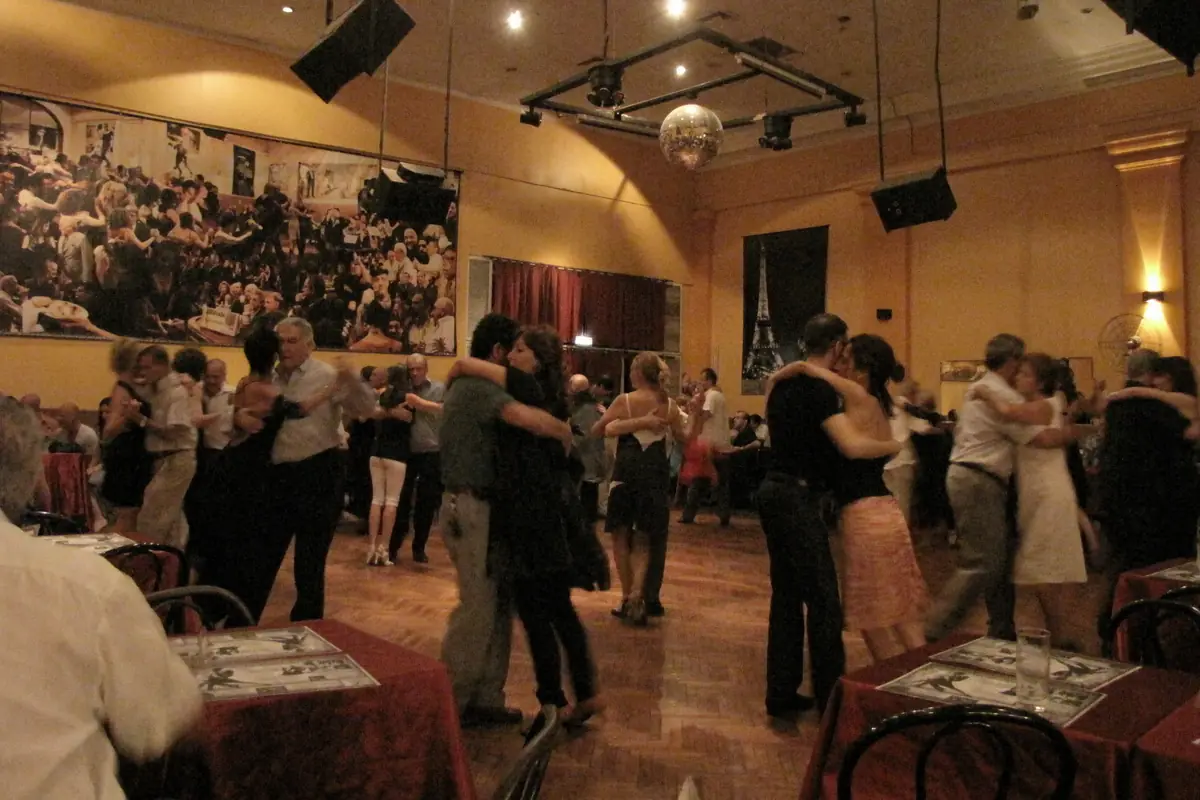
UNESCO treats tango as three arts at once: music, dance and poetry. Its listing describes a tradition developed by the urban lower classes, bringing together European immigrants, descendants of African slaves and the region's criollos. It says tango embodies and encourages diversity and cultural dialogue, and that it is still practised in the traditional dance halls of Buenos Aires and Montevideo. The joint Argentina–Uruguay inscription dates from 2009. The listing places tango in the Río de la Plata basin, closely tied to Buenos Aires and Montevideo.
The port neighbourhoods of the 1880s
Tango began in the 1880s in the working-class port areas along the Río de la Plata, the estuary between Argentina and Uruguay. Bars and brothels often hired bands to entertain their customers. The venue's own blog adds that early tango was danced mostly by men, because heavy immigration left a shortage of women, and that men practised on street corners before going to milongas.
Three roots
Wikipedia describes tango as a blend of the Argentine milonga, the Spanish-Cuban habanera and the Uruguayan candombe. Those names are worth knowing, because the first, milonga, also became the name of the dance event where tango is danced. The mixture reflects the neighbourhoods where it was born, where immigrants from Europe lived alongside Afro-descendant communities and local criollos, often in crowded tenement houses called conventillos.
To Paris and back
Dancers and orchestras from Buenos Aires travelled to Europe in the early twentieth century. The first European tango craze took place in Paris, followed by London, Berlin and other capitals. According to the venue's blog, elegant Parisian salons embraced the dance, and Buenos Aires elites then accepted it. Argentine tango had at first been rejected by middle- and upper-class dancers who preferred ballroom forms such as the Viennese waltz.
The golden age
The core repertoire of traditional tango dates from the 1930s to the 1950s, often called the golden age. The venue's blog describes it as a professional industry, with large orchestras, dance halls and international tours. Tango canción, the sung form, developed lyrics of love, loss, betrayal and nostalgia, and Carlos Gardel helped develop it in the 1920s and died in a 1935 plane crash.
Close embrace, open embrace
Argentine tango is danced in a close embrace, chest to chest, or in an open embrace, depending on the style. Tango canyengue was an early, rhythmic style from the 1900s danced in a closed embrace, and tango nuevo, popularised after 1980, uses a more open embrace and more complex figures. Ballroom tango is a different dance, with staccato movements and head snaps that are foreign to the Río de la Plata style.
Who keeps it alive
UNESCO's listing names the people who practise tango: musicians, professional and amateur dancers, choreographers, composers, songwriters and teachers, together with national living treasures who embody the culture of tango. It adds that tango is incorporated into national heritage celebrations in both countries. Wikipedia notes that barrel organs helped spread the dance from the suburbs. That mix of professionals and amateurs is why you can watch a small-room show one night and a neighbourhood milonga the next.
Stage tango and social tango
Today tango lives in two places. On stage, professional dancers and musicians perform choreographed or improvised pieces for an audience, whether in a large hall or a small room. On the floor, people dance socially at milongas, where the essence, according to the city's tourism site, lies in the embrace and the connection with a partner, not in fancy steps. Seeing both gives the fullest picture of the art.
Read next: How a milonga works: tandas and cortinas
Frequently asked questions
Where did tango come from?
From the working-class port areas along the Río de la Plata, in and around Buenos Aires and Montevideo, beginning in the 1880s.
Is tango on UNESCO's heritage list?
Yes. UNESCO added tango to its heritage lists in 2009, on a proposal made jointly by Argentina and Uruguay.
Is ballroom tango the same as Argentine tango?
No. Ballroom tango has staccato movements and head snaps that are foreign to the Río de la Plata style.
Sources